Clouding Your Kung Fu Mind

11 12 2014

A conversation I have often had with Kung Fu practitioners is that I lament the diluting of Chinese martial artists these days. In the traditional Chinese martial arts–the TCMAs–we have two extremes in modern times. On one hand, there are the highly idealistic practitioners who teach exactly as they learned it without modifying or modernizing anything. They practice only forms, fight from a cat stance if they fight at all, and basically have no idea how to fill the needs of the average person seeking self defense. At the far right of this discussion, we have the SanDa/San Shou practitioner who loves to fight. Regardless of what system he studies, his entire repertoire looks exactly like every other fighter at the events he frequents. He may be a Tong Long student, a Hung Gar student, a Wing Chun student–but in the gym he looks like a Muay Thai guy. Kung Fu just doesn’t seem to be Kung Fu anymore.

But somewhere in the middle there are the rest of us, who do a mixture of traditional training and modern methods. We shadowbox, we do roadwork for our wind, but we also practice our Sei Ping Ma, Chi Sao and use the all metal Kwan Do for our strength training. Our forms may have a little extra zing in it, based on our taste and research as modern students of the art. We may do our techniques with the fist rather than the Fu Jow because it seems more practical. We may have boxed for a few months to gain an understanding on how that style of fighting works–and then import those lessons to our Choy Lay Fut.

All those things are good, but please, don’t cloud your Kung Fu mind, or you run the risk of diluting your system.

Before I get jumped on by the guys at the Kung Fu online forums, here’s a test:

Can YOU fight using only techniques from your system’s first form? No jabs, no round house kcks, no clinching… Just the techniques from your first form’s techniques?

If not, read on.

This is my point. Many of us love our systems and we have a few bread and butter techniques that we hold dear to. Most of us, however, have almost nothing in the form that we actually use in sparring or street fighting. Those of us who can fight, most likely use what every other guy uses. We have boxing punches, Muay Thai kicks, and jujitsu takedowns. Our mind simply cannot wrap itself around the idea of taking our classical techniques and fighting a mugger at the ATM with them or taking them into the ring. I have a Si Hing who was a boxer before joining Jow Ga, and he used his background in applying his Jow Ga. I respect him, I honor him and his version of Jow Ga, but I believe there is another level that the art could have been taken to and that is where I arrived to this philosophy. Chinese martial arts systems are very valid forms of fighting and they really don’t need to be cross pollinated with other styles of fighting. To do so is not bad; I do it myself. But I understand that there is a dimension that I must strive for and for the last ten years, my personal journey in Jow Ga has been guided by this idea. Any system’s first form can be broken down into bite-sized pieces of gold and used in fighting without any help from outside systems. The hard part is making it happen. Once you do so, you will understand your system better than most other practitioners. Give yourself six months of foreign system-free training, and see where it takes you.

Thank you for visiting the DC Jow Ga Federation.


Critique the Master

2 12 2014

Ah, yes. Analyze the master, even if you have to find fault with the way he did things. Understand that no man (or woman) is above reproach, and as long as we are human there will always be room for improvement. We strive for perfection, but no man should ever believe he has arrived at that point. For the moment you believe you have perfected the martial arts, you have just initiated your demise. Perfection, my brothers, is a never-ending, always out of reach plateau. You may get near it, you may realize you are approaching it, but the closer you reach perfection, you will realize a new goal or challenge. In order to become the perfect martial artists, you must always be in pursuit of it.

(My #1 gripe with Bruce Lee fans, btw–many hurt their own growth because they believe in Lee’s doctrine without question, without deviating from his path when the man was 32 years old…)

If your Sifu has done his job right, the day you become a full instructor, you should be the absolute best product he could produce. We martial arts teachers are a curious bunch. We honor our Masters and teachers by hoping to become the best Kung Fu fighters we can, but in order to do so, we must improve our teachers and their systems. We are often friendly and cordial with each other, but inside our minds, we think we are better than the next guy and do our best to show it. Some of us actually call each other up and tease each other about being better. Some of us take it personal and actually dislike our “competition”. Some of us are in competition with our own brothers. My Si Hing Chris Henderson and I used to kill each other with insults because he owned a Kung Fu school and I worked for a commercial Dojo. When I encountered his students in tournaments I would tell my students to get those “Wu Shu artists”. Another Si Hing of mine would call me a traitor whenever he saw me in a Karate uniform point fighting, telling me I was playing Tag. I would tease another Si Hing, Ron Wheeler, for being a break dancer in a Kung Fu uniform–and he’d tease me about the time he popped me in the nose when we fought at American University (I won lol). My Baltimore friends, who represented four different styles, were my opponents every month in tournaments up and down the 95. Through all of this, we sought to improve ourselves and improve each other through friendly (and not-so-friendly) competition. Yet the one person with whom we should also compete against is the person we often refuse to oppose: Our own Masters.

If we teach our respective styles without acknowledging the potential or need for improvement, our system will not improve. How can you teach your students to develop an unstoppable attack if we do not understand where our weaknesses lie? How can you give your students an impenetrable defense if you do not also teach them how they can potentially be beaten? In the Filipino martial arts, there is a term called “counter for the counter”. When you teach an attack, you must identify the possible counters to that attack, then you must learn how to counter that counter. In other words, in order to understand your system better, you must understand how to beat the system your Master taught you. Many of you are not psychologically ready to face this. Too many believe that their system cannot be improved. Too many believe it would be disrespectful to question what your Sifu taught, or if they had made any mistakes when they taught you. I would suggest that your Sifu very likely improved the art his own Sifu taught him when he taught you, however. Very few of us teach exactly as we were taught. Most of us have our own specialties, our own weaknesses, and things that we like in the art. Doesn’t it make sense to personalize our Hung Gar, our Wing Chun, our Tong Lung, our Choy Lay Fut–so that our students can get the best we can offer?

There are few ways to do this without changing your Sifu’s curriculum. One way is to omit those things you cannot do well. Another is to send your students to various classmates who can perform skills in your system better than you can. You can also elect to emphasize some skills and forms more than others, based on your own taste. But more often than not–you will have to change many things to fit your own individuality as a teacher, and your student’s learning ability, physical limitations or gifts, and needs.

When formulating your school’s lesson plans, it would be very fair to your student to find the most efficient, effective means to results that you can. Our teachers did not know everything. We must admit that. Of course, we respect our masters, but we do them a disservice by idolizing them and deifying them to the point that their legacy is ruined because we are too much in adoration to allow their art to grow. Don’t simply take the training plan you had as a student and regurgitate it without thought. Think of things that you and your classmates struggle with. Is there a way to make it easier to learn? Was there something in your Sifu’s school that caused a many students to drop out? It isn’t fair to just say they were “losers” or “weak”. Did you have classmates who did not get results? Have you found many instances of beginners becoming better than advanced students? Or, let’s just cut to the chase… Can you find a better way to teach than your teacher? Is there anything in the curriculum that is impractical, needs an overhaul, or needs to be emphasized? You are now the Sifu, give your students what they are paying for!

This is one reason I am not in favor of newly made Sifus being allowed to leave right out and open schools. Either that, or we should give instructor candidates ample time to work out those things out before getting in front of a student body. Once the instructor-student has learned the art, he or she may need time to fully absorb and understand the system before it is presented and taught to new students. We want to be fair to our students, and our students’ students by making sure that the art we are giving them has been absorbed, tested, developed and revised. New Sifus must be comfortable enough with the art–with his teacher’s art–to look at it with a critical art, and not be afraid to say, “I’ve improved my teacher’s art.” It is not a slap in your Sifu’s face to say that. In fact, it is a compliment. You are saying, “Sifu, I have learned your art and I have found a way to make it fit me better.”

Saying so means that your Sifu has done more than just taught a student; he has created a confident and wise Sifu-student who has become more than just a certified instructor, he has become a peer.

Thank you for visiting the DC Jow Ga Federation.


Kung Fu and the Pursuit of GREATNESS

18 11 2014

The Chinese martial arts is not a dying section of the martial arts world. Listen to a so-called “modern/tactical/CQC/street-oriented/sports” enthusiast–and one would think that we are. The martial arts, like all skills and arts, must find relevance and adjust to the change of times…. it’s just that simple. Perhaps many of us have not learned to do this. Maybe some of us are stuck in the 70s, stuck in the Hong Kong days, or stuck in the 1800s. But dying? No.

Boxing could be said to be a dying sport. They once said that about the art of wrestling; yet when former wrestlers started beating BJJ and Muay Thai fighters in the MMA arena that art found new life (and fans) didn’t they?

Kung Fu practitioners in their 30s and older may in fact be stuck in the Shaw Brothers or Golden Harvest era, when most of the world began to discover the difference between Chinese and Japanese arts. Yet as the average person’s exposure to the arts increased and we now have non-martial artists who know how to throw basic martial arts techniques it is no longer enough to simply be exotic. In the 1980s, a Kung Fu guy could do a nice form and ramble off lineage for credibility–today, he needs to be able to do a thing or two on the floor with an opponent to convince his peers that he’s the real deal. This is where many of us fall short; this is why many other stylists dismiss the Kung Fu guy as “forms guys”…

You know what I’m talking about. Go hit the local open tournament. Kung Fu people in the morning doing forms and weapons, walking around with their chests puffed out. Hell, even many of us prancing around in sleeveless jackets and sporting muscles and studded bracelets. But when the Pee Wees have finished with their forms and toothpick gwun and aluminum-foil dao forms, all those Tai Chi, satin-with-frog-button, and tough-guy southern style jackets get traded in for T-shirts and school jackets just in time to sit in the bleachers and talk about how the karate guys are just “playing tag” and aren’t doing real fighting. But at the same time, those Karate guys are making the same dismissive comments about us. And when you attend a Chinese style-only tournament–pretty much the only place you’ll find a lot of Kung Fu guys fighting–you see the same playing tag and unreal fighting, just sloppier. If you happen to run up on a Kung Fu tournament with some full contact (and I discover this happens even more these days), most of the hard core fighters are sporting MMA or Muay Thai gear.

Tell me I’m wrong.

It’s pleasing to see that Kung Fu fighters have become more competitive these days. It would just be nice to see more Kung Fu guys become competive with Kung FU. Am I right, am I right, or am I right? Why should a Kwoon need to be influenced by MMA to actually introduce some toughness and fighting spirit? In each local CMA community, there only seems to be a small handful (oftentimes, one) of schools whose Sifu aspired to become great–to become dominant–over the other schools. Not just dominant over other Kung Fu schools, but to be the best school around the city. Often, this is the Sifu who never put out a video tape series, or never wrote articles on himself. He is sometimes disliked by other Sifu in town. He may have been the youngest of them. His history or credentials might have been questioned. He may have been the newest, ignored Sifu on the block many years ago, and he used that slight to fuel his desire to show the other guys up. And 20 years later, his guys are the killers of the community. <—-  And THIS is what I think happened, Kung Fu comrades…

See, we have spent the last 30-40 years training lackadaisically. We did not compete with one another. We judged each other by measuring lineages and timelines rather than win/loss records. We focused on keeping the “less-than-authentic/less-than-fully-Chinese” schools away from the Chinese New Year celebration, rather than turning our focus inward and trying to produce the best generation of students and fighters we can. We shied away from tournaments (and certainly the ring) and our students never had much to compare themselves to, and with nothing to sharpen our blades against, too many Kung Fu schools live up to the “Soft Style Division” that “Hard Style” tournament promoters deem us. We’ve gone so far from the tradition of one-upmanship that makes for great martial artists, and we’ve become the school that teaches Kung Fu for discipline, good grades, living in harmony, longevity, blah blah blah…. anything but fighting and self defense. We’ve convinced our students (and ourselves) that fighting is not the point, and that although we train as if we will never need our martial arts–if the day came when we actually DID need it–when some guy with a brick or a knife or some friends who want your wallet, all of that horse stance training and learning postures and push hands will miraculously save your ass. Even though the only bloody nose you’ve suffered in training was when some guy slipped up and did it by mistake and Sifu admonished him for using too much power in Chi Sao practice (sigh).

Training for no other reason but to make another Kung Fu practitioner look like a fool is bad. Training for no other reason but to make yourself look good is bad. However, we must still train to make another Kung Fu practitioner look like a fool and to make us look good is good–if the ultimate goal is to strengthen your skill and reach a level of dominance and really reap the self defense and combative benefits of all this training and study. Forget trying to look like you are humble, who cares what you look like? Humility is good, but does you no good if you have commited your life to the martial arts and you have no skills to keep you safe on the street. Yes, there are many of us who don’t do this for fighting. For those martial artists, they should take the words “self defense and combat” off their websites and business cards and flyers. But if you are in the business of keeping people safe, we must do away with the rhetoric and outdated, dying practices and get back to the 21st century. Your lineage means everything, but it also means nothing. Give your students what they really think they’re getting. Start practicing for greatness, so that you can produce great martial arts students. It all starts with seeing who is best between you and the next guy, then once you find out, you continue to outdo each other, until you are both great. This is how the Chinese martial arts community will get its respect in the field, not by sitting in small circles and pointing to everything except real skill.

Bring back the competitive spirit into Kung Fu. Thank you for visiting the DC Jow Ga Federation.


Moe’s Still Got It (Longevity in Kung Fu)

30 09 2014

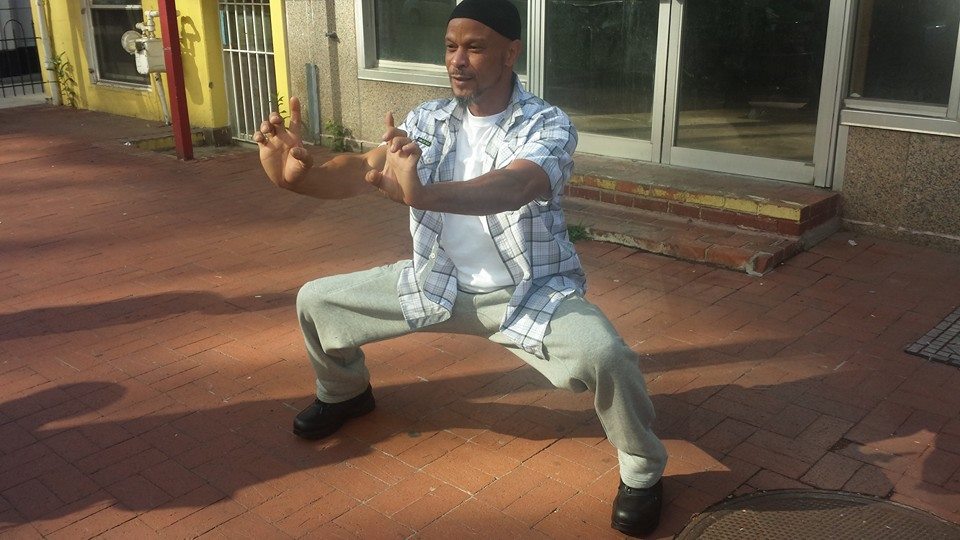
Craig Horse stance

Also known as “Craig’s Still Got It”…

It’s taken me 5 months to write this article.

So, in the months we’ve started this blog, we have gone from three guys (Ron Wheeler, Sharif Talib, and Maurice Gatdula) discussing shining a light on Dean Chin’s memory, to rounding up the legends of American Jow Ga and locating old friends and family, to planning an American Jow Ga family reunion like you wouldn’t believe. In all of this, I have made an observation that I cannot make about my other martial arts family–my Filipino Martial Arts family:  Everywhere I look, I see men in their 50s and 60s who look great. Not just “great for their age”–which is an insult to all the hard work and discipline these folks have put into still maintaining their health–but amazing in that they have maintained their youthful vibrance into an age where men are beginning to die of old age and health problems. By contrast, in the other martial arts circles I run in, I have noticed that bellies, beards and health problems run amok in men who have barely left their prime.

Even in other Chinese martial arts families I have known, the sense of athleticism isn’t there. The competitive nature of the family members isn’t there. The feuds we have isn’t even there, in the way that we have them. And I have a theory.

Chinese martial artists are always talking about “longevity” and “vitality”–ideals that most martial artists give lip service to, but few really pursue. So what are these things anyway? Is it just the endeavor to live a long life?

Martial Arts in its purest state is at its core a means of self-preservation. To some, it simply means the will to remain alive. To others, it is the effort to remain alive. There is a difference. In the same way martial artists can take a passive approach to their craft, they can also elect to take a very aggressive, assertive, proactive approach to the art. Self defense can deflect an attacker with the simple desire to get away and stay alive–or it can be an action verb, to stay alive and eliminate the attacker. The two mentalities are not the same and I submit to you that they are not equal. A passive approach for the martial artist may fail. In fact, it is highly possible that it will fail should the passive martial artist encounter an extremely hostile, violent opponent. Fighting involves more than simply knowing techniques and being able to use them. Fighting is often psychological, where one man is trying to take the life of the other. In this case, the only way to stop him would be to render him incapable of continuing to fight; this method most likely will involve crippling, maiming of killing the opponent. Passive martial artists dislike this kind of talk. They believe that a man hell-bent on taking your life can be subdued and stopped relatively unhurt using the correct technique and appropriate amount of force.

On the other side of this philosophy is the idea that one must be prepared to kill his opponent, to break his bones, to permanently disfigure him, to crush his windpipe, to put his eye out his socket… Whatever it takes to stop the opponent and eliminate the threat. The more violent the opponent or opponents, the more violent the reaction. This is a mindset, not a set of techniques. In teaching students this very specialized skill, you must also teach him the thinking of one who must use these techniques. One cannot simply teach a form with such techniques, teach him a method of performing the routine in an aesthetcially pleasing manner and leave it at that. You must condition the student to be able to hurt the opponent with these skills without hesitation. You must train him until he is not physically inferior to the attacker. You must make him mentally and emotionally tough so that he knows when to use the skills and can do so without feelings of guilt. He must be tolerant of pain and fear. He must believe that he cannot be defeated and believe that he is superior to his attackers. Only then, can a martial arts practitioner be capable of facing two or three men prepared to do him harm and send them to the hospital while he goes home safe.

So, you betcha there is a heirarchy of martial arts philosophies. One is passive and in denial about what combat really is, while the other understands that combat is not a noun, but an action verb. One teacher simply wants to live a long life, while the other wants to stay alive. One trains as a prescription to old age and poor health–and the other trains as if his life depended on it. One takes care of his body so it will still carry blood and oxygen for years and years, while the other wants to become as strong and durable and youthful as it ever was. Both will live a long time. Both are still martial artists. Perhaps one does it because he simply wants to live until he is 90. While the other may be motivated by ego or vanity–he clearly wants to live until he is 90 and hear the words, “Moe still got it.” He wants to still do the things he did as a young man when he is older. He doesn’t want to simply live, he wants to live with life pumping through his veins. They both never plan to retire, but one takes a passive approach to his aging self and the other holds on to his youth.

If you round up a group of 20 former casual martial artists, meaning they never competed, never fought to be the best, never engaged in the rat race of martial artists with an ego–all in their 50s–you will likely find men who no longer “do” martial arts. They may teach, own schools, etc., but they most likely don’t fight, compete in tournaments, and so on. They will likely be out of shape and full of health problems. On the other hand, round up a group of 20 former competitors, fighters and champions–you will most likely find the opposite. Surely, there will be bald heads and some pot bellies. But more often than not, you will find men at an advanced age, who still have “it” like they did when they were young. Because men like this can never walk away from the martial arts and the question we always ask when we are around another guy:  “I wonder if I can take him?”  <—- And this question keeps men like myself, Ron Wheeler, Sharif Talib, Craig Lee training so that, decades later, when people finally run into you, they just shake their head saying, “Yeah, Craig still got it…”

The late Master Dean Chin’s approach to Jow Ga was not that Kung Fu is a party art. It was not for the masses. It was not something we did for certificates and rank. It was a path to guaranteed preservation. Preseveration in combat when you’re young, and the side effect of that is that your youth will be preserved when you are older. It’s not enough to just still be here. You want to be here, just as strong, just as full of life as you’ve ever been. Longevity, then, if you are training your Kung Fu for the same reasons we do, if a means to bottling up the young man within you and keeping hold of it while you’re old.

If you ask me, this group of Kung Fu men (the youngest one is 45, by the way) are a fine looking bunch. Thank you for visiting the Dean Chin Jow Ga Federation.

Raymong Wong, Hon Lee, Kenny Chin

Raymong Wong, Hon Lee, Kenny Chin

Kenny Chin, Ricardo Ho, Craig Lee, and Ron Wheeler

Kenny Chin, Ricardo Ho, Craig Lee, and Ron Wheeler

Kenny Chin, Raymond Wong, Chris Henderson, Ron Wheeler, Ricardo Ho
Kenny Chin, Raymond Wong, Chris Henderson, Ron Wheeler, Ricardo Ho



My Book: Make a Living with Backyard Dojo

24 07 2014

Let’s change the topic for a second. I’m assuming that the average reader of this page is a traditional Kung Fu teacher who does not run a commercial kwoon/dojo. You don’t want to be an alternative day care center. You don’t want to sell rank every three months. You don’t want to water down classes to keep everyone’s interest. Your Sifu taught you form, Lion Dance, fighting, even how to teach–but he didn’t teach you how to make money with Kung Fu did he?

Of course not. Our Sifus did this for love of the art and propogation of the system, and chances are pretty good that you did too. However, you have to have money to make keep the school (and ultimately the system) going, right? There are plenty of books, courses and seminars to teach the McDojo owner how to run his business–but about about you? The traditional, hard core, Sifu? There isn’t much. Perhaps you don’t even own a school. You’re enrollment is small. You don’t have $499 to plunk down on a Guerilla Marketing course. What is a Sifu to do?

Well… I’ve written a small book, which my editor calls a “mini-book” because it’s only 22 pages long. I wrote it for the Masters of small, independant martial arts schools who would like to feed their families with their schools. These are not men who want hundreds of students and million-dollar high-tech dojos. They are true to tradition, in both skill and business practice, and the most they want is to open a humble commercial location that pays the bills and puts food on the table and their kids through college.

I have invested thousands of dollars trying to learn the business side of the martial arts. I’ve been talked into offering a belt system, utilizing contracts, teaching in day care centers (seriously), teaching seminars on tour, even opening satellite classes across the country. I have taught in the middle east, in central america, as well as in sober living homes. All this, in pursuit of wanting nothing more than to afford teaching the real art to my most dedicated students while these other ventures paid my bills. My ultimate goal back then was to offer my training for free. I learned a lot about business, and learned a lot about how I can market and run my business without doing what everyone else does.

Anyway, the one thing I noticed was that I could not find business information that was directed at a guy like me–who teaches full contact; who uses profanity in my classes; who yells at students; who has ex-cons and gang bangers in my classes; a man whose students (including children) leave the school bruised, banged up, bloodied, and sometimes in need of stitches. Yes, I have insurance. Yes, I pay taxes. And yes, there is a market for my type of martial arts. I have a website, I’m in the Yellow Pages, occasionally I am on the radio and on cable TV, and I don’t promise good grades.

I have seen many good friends and good martial artists who have closed shop because they did not have the business tools to stay in business. One of the painful reminders of this, was a fear years ago, when I had refused several students of a friend’s dojo who attempted to join when they saw the writing on the wall. 6 months later, they were there after his school closed, and then he stopped teaching out of his garage. I’ll say this here, and some of those students read this blog, but I thought as traditional Karate teachers in Sacramento go, he was absolutely the best… even better than me.

So I wrote this book for you guys. The guy who surfs the net looking for ways to keep his school going while his wife urges him to “get a real job”. The guy (who, like I once was) working for minimum wage on a graveyard shift job in order to keep a school. The guy (like I was) who used money from tournament winnings to pay bills because his enrollment was too low to pay rent and eat.

I was asked to make it at least 40 pages, but I had a message to give, and it came out to 22 pages. Sorry Mike! I didn’t want to fluff it up or pad with filler just to make it seem “worth the money”… I know people who teach their martial arts that way. You’ll find that the other books I write will be the same way: short, to the point, but full of good, useful information. And I am not some young, wet-behind-the-ears MBA who knows nothing about what the real business world is like. Just like I am not some 50-something millionaire Karate clown trying to convince you that you’re not legit unless you’re selling belt exams and birthday parties.

If you want to really put bread on the table with good, quality martial arts, this book is for you. Look at our “Offerings” page off the main page, and you’ll see ordering information there. Please, leave comments or at least email me to give me feedback after you’ve read it!

Thank you for visiting the DC Jow Ga Federation.


The Kung Fu Bum, Redefined (Made in China) pt II

18 07 2014

This article is a continuation of this article. When you get a chance, go back a read it, I’m sure you will find it educational.

The Kung Fu Bum is not an outdated lifestyle, as many school owners will claim. It is not useless or foolish. I was taught this as a young man with a school of my own. I rubbed elbows with some martial arts millionaires as well as small school owners like me who were making a pretty good living. I found one thing in common with all of them that I just couldn’t swallow:  They made excuses for the mediocrity of their students and would blame it on the times.

Can you feed yourself with your martial arts? I can.

Most people walking through the door don’t have the discipline needed to train the way we used to.

A system needs representatives to exist. There are many GREAT Kung Fu men with no students.

I disagree terribly.

If you aren’t willing to miss a meal for Kung Fu, you don’t deserve to say you’ve Mastered it. No more than a man who says he loves a child, but is unwilling to work at McDonald’s or miss a meal to feed him. Kung Fu must be sacrificed for to achieve the higher levels, and many teachers were unwilling to sacrifice to learn it. As a result, they have little more to offer students besides certificates, forms, and the chance to dress up in “Chinese” clothing and drop names and philosophy. There are levels of understanding in the martial arts and the problem is that many who do the Chinese Martial Arts have their priorities in the wrong place, and we are speaking out of place.

You have Forms guys trying to talk like fighters.

You have traditionalists who put down fighters.

We have Lion Dancers disguising what they do as “Martial Arts”, when it’s only “Martial-like” Arts.

You have Chinese style McDojos dressed up as traditional Kwoons and pretending to be one. Many go so far as to invite emissaries from China and take frequent trips to rub elbow with “the Chinese” in the hopes that what they do looks more credible.

(Don’t get hurt or offended, please. This was only meant to define the roles of various types of Sifu.) I could go on.

We have Sifus who consider Chinese Chinese arts good, and non-Chinese Chinese arts okay–regardless of skill level.

We have students who will only study in a school if it’s dressed up to look like an MMA gym.

We have students who will only study in a school if it looks like the set to a David Carridine sit-com (sorry, bad joke)

And here, we arrive at my point. The true Kung Fu lifestyle is not a thing of the past, nor is it something that can only exist in China. Good Kung Fu should be strived and sacrificed for–regardless of who you pay to get it from. The Kung Fu Bum is actually not a bum at all. On occasion, a Kung Fu Man (which is what I call him) has been able to navigate this economy to find his place, professionally, as a Kung Fu expert. In the days of old, Kung Fu men became soldiers, security men, body guards, taught soldiers and police. Today, the process is more complex, but this is still the option for a Kung Fu man besides simply opening a school. Or a Kung Fu man who does open a school would just have to figure out the formula to success using his art–without watering it down, as many claim you must. Once you learn the art, develop the skill, you must then find a way to transform that art into a marketable, sustaining form of income. This, in turn, will allow you to spend more of your time in a Sei Ping Ma and in front of a punching bag–rather than a desk–and continue to see where the potential of your Kung Fu skill will take you. Kung Fu need not be a burden, and it is as valid a path as any academic endeavor. Should you pursue Kung Fu the right way, even those called Martial Arts “Masters” will admire your skill, rather than your wallet or reputation.

I have some suggestions. Stay tuned. In the meantime, please see our “Offerings” page and donate $19 to receive a copy of my mini-book “Make a Living with Your Backyard/Garage/Community Center Dojo”.

Thank you for visiting the DC Jow Ga Federation.


The Kung Fu Bum, Redefined (Made in China)

18 07 2014

In my archives, I have a booklet entitled, “Stuff I’d Like You to Know”, which was given to any new Jow Ga student I took during the 90s and early 2000s. In those days, my school was a Filipino Martial Arts school, and I only taught Jow Ga privately. In the booklet, I introduce my new students to the life upon which they are about to embark–as this is not a class, I tell them… it is a lifestyle.

In it, I have a section about the Kung Fu Bum:  A man, who, while perhaps highly skilled in Kung Fu, is a loser in life because he defined himself by the martial arts and neither completed his formal academic education nor pursued a successful career. This is a man who foregoes study in college to study martial arts, who often attends classes free because his Sifu sees him as a great protegè although he cannot pay tuition. We all know them; often they are vagrants who still live with family or parents–but when it’s demo time or sparring time, even his class mates who are doctors and lawyers envy him. I was a Kung Fu bum, but I found a little financial stability by opening a school. Few of us martial arts bums do, however–so I did my best to persuade my students not to follow in my footsteps and choose life over martial arts.

Boy, was I wrong.

Kung Fu, it turns out, is a way of life. Not all paths lead to financial prosperity, and that’s okay. Not everyone measures himself by homeownership or what kind of car is in his driveway. If this art is to flourish and prosper, someone will have the carry the torch of the Masters before us and undertake the burden of a Kung Fu gatekeeper. All of this, in spite of the fact that some of us will sleep in our gyms and have to skip a meal when it’s tuition time. I may draw criticism from many of my own brothers by saying this, but when you are gone from this Earth, styles will mostly be remembered by the heroes who represented this art as a Tiger in the jungle–not by the many smaller animals who sat as prey in his presence. This is not to say that those of us who have many students are insignificant or less credible as Kung Fu men. There is room for all types of martial artists in this community, and there is room for all degrees of knowledge and skill on a system’s family tree… There is a role for everyone in every system, including the Kung Fu Bum.

Like it or not, martial arts must be trained daily and full time to reach its potential. I have a Si Hing who is criticized by other Si Hing for talking some of the younger generation to forego college for martial arts. I have my opinion about his approach and his motive, but I am also thankful that he introduced me to this idea, as many have done the martial arts for years and have never known the feeling of being dominant over most others in their presence. There are many Kung Fu men who are simply called a “Master” because they have many years in the system and have many students and grand students. Yet there are still some men (many unnamed and largely unknown) whose skill shadows those Masters, and they serve as role models to those who knew them. Some of your Si Gung and Si Jo were such men. They died penniless. They were not famous. But they possessed skill that most in the martial arts have never witnessed in person or in the media, and the stories told about them as myth were, in fact, true. We didn’t get these martial arts greats by some guy practicing a few hours a week after work. These men developed such a level of skill because they didn’t have a traditional career; to them, the martial arts was not a hobby, not a job, not a business–it was a calling.

When your Master said that you would be lucky to have 2 great students in your life time, he wasn’t speaking of “good” martial arts students… he was talking about the Kung Fu Bum. Or, as you will one day call him:  A Master whom you would hope to one day be as skilled as.

Thank you for visiting the DC Jow Ga Federation.


DC Jow Ga NEW CLASSES!

3 06 2014

We’d like to announce new classes offering Dean Chin’s Jow Ga. If you are nearby, make sure to check us out… or at least stop by to say hello!

The new location for the DC Jow Ga Federation is at 912 Rhode Island Avenue, Northeast, in Washington, DC. Classes will be led by Instructor Sharif Talib, and will be frequented by various senior Sifus including Sifus Craig Lee and Chris Henderson. Assisting will be long time Jow Ga practitioner Dr. Ivan Robinson.

Let me jump in by telling you a little about Kung Fu and the community.

Kung Fu, while a great way to get in shape and learn to fight, has many uses. Among the benefits are two things we hear of but rarely see in most martial arts communities.

The first is the health benefit. Exercise helps to lower the blood pressure and increase one’s metabolism. Jow Ga Kung Fu training, in particular, does more than many other exercise forms to increase metabolism because of the early emphasis on stance training and punching. This in turn builds muscle in the largest group of muscles on the body–the legs. The increased skill in footwork will help the body move more efficiently and prevents tiring early; at the same time, the increased muscle mass will result in more burned fat per workout. The cardiovascular health one will build assists with the digestive system, as well as helping the practitioner sleep better and moving blood to clean impurities from the body. The strength built in the back, hips and abdomen will help prevent back and skeletal problems, decreases the chance of injury, and helps the body rid of many stress-related headaches. In the practice of Jow Ga, one is encouraged to eat healthier food, as a poor diet will impede performance on the floor and promotes an overall healthier lifestyle. The practice of Jow Ga forms are physically demanding and especially in its weapons forms–builds strength and muscle in many areas of the body most activities ignore.

Secondly, the Kung Fu school teacher is a leader of the community. The school is a protector of the community, and as a protector, its students learn to behave as warriors. They are selfless, compassionate, brave and pious. The Kung Fu school has long been a center of health and discipline as well. In many communities, the Kung Fu school is also a center of academic learning. In the West, the Kung Fu school’s ranks are filled with children, and no responsible Sifu would have the attention of children without instilling a sense of academic achievement and helping children find the answer to the question:  “What do you want to be when you grow up?” For many children living in female-led households, the Sifu is the main male role model those children have–whether boys or girls. Kung Fu Sifus, regardless of how short a student’s tenure may be, have an impact on lives even when the Sifu himself is unaware of it’s degree.

Dr. Ivan Robinson is a product of such an environment. Many of us who knew him as a child (damn I feel old) remember an obnoxious child who nearly lived in the school. He talked loud during class, he talked loud during martial arts tournaments, when he competed, he broke the rules and each of the seniors took turns lecturing as well as scolding him. I recall one tournament in 1985, during the grand championship division for the forms division in which I competed–while my opponent from the Hard Style Weapons performed his Nunchaku form, the auditorium was quiet except for one squeaky, unseen voice… saying “That guy sucks. Moe’s gonna win this. Man *I* can do the numbchucks better than him…”  It was Ivan. And I didn’t win. 😉

What many people didn’t know, was the tumultuous home life Ivan lived that caused him to want to be at the Kung Fu school nearly 7 days a week. Ivan came from a rough background. He got in trouble for fighting in the street. He sometimes bit off more than he could chew. And if he was in a jam, he’d pull weapons from his book bag and use them. He did not come from a household that could afford tuition regularly, so he was given a “scholarship” and allowed to train for free. Still a member of the Jow Ga family, Ivan stayed in trouble. Statistically, he was expected to fail in life. But he didn’t.

Ivan became a Marine. He went to college. He became a doctor. He helped to pen a program that gives patients with health problems a drug-free alternative to solving their problem. One that is low cost. One that has a history hundreds of years longer than modern medicine, and produced more healthy patients who lived longer without health insurance and big pharmaceutical companies. One that, if you so indulge, will help you live longer, with a better quality of life than most who do not, and is centuries proven to be the best side-effect free drug ever. One that will help diabetic patients live healthier, help those with heart and circulation problems have more energy, can relieve back and joint problems, and can cheer up the depressed without drugs. But don’t worry about having the money to pay for it–this program will be covered by your health insurance.

As crazy as it sounds, a man who has joint and back problems due to being overweight can either take drugs to mask the fact that he is STILL overweight, or he can get weight loss surgery, or–in the case of this new health care program–he can be “prescribed” and exercise class to lose the weight. Regardless of your opinion of President Obama’s new health care plan–this option is brilliant, inexpensive, and safe. An in the Washington, DC area–it is a Jow Ga man, who was once a poor kid from the hood–who instituted this program. Back to my point, the Kung Fu school is more than a place you go to learn to fight. It is a place where a kid from the hood with a Master’s Degree in Mathematics can share the floor with the son of a drug addict, a parolee, and a U.S. Marshall. It is a place where a guy who was once an alcoholic is like a brother to a psychiatrist, who helps him beat his addiction. It is a place where a low wage earner who struggles to pay tuition meets a doctor who hires and trains him to do billing, a job he would never be considered for in most cases. The Kung Fu school is a community and a family, and a man like Dr. Ivan Robinson is proof of that.

I am proud to call him a brother, and I admire him–although he will always be that talkative boastful teen I use to teach in the kids class. And as a self employed middle aged man with health problems and no insurance (lol), he is my go-to guy when I’m sick.

If you are in the DC area and interested in learning Jow Ga, come check us out! If you are already a Jow Ga practitioner and would like to learn a little about Jow Ga from a different angle, come by! We are all part of the same family, and Jow Ga is a system that can vary from teacher to teacher–you can never learn too much. This location will feature many instructors from time to time, and each one will be able to show you this system from various points of view and specialties. For more information, visit Dr. Robinson’s site at MyHealthyDC.

Thank you for visiting the Dean Chin Jow Ga Federation.


Execution of the Kung Fu Form

11 03 2014

Some people confuse the terms “execution” of a form versus “performance” of a form.

In Sifu Dean Chin’s Jow Ga, we don’t perform our forms–we execute them. Some teachers show their students how to perform a form so that it is aesthetically pleasing–They will add multiple kicks and jumps, poses–even acrobatics–to their forms. Others focus on the combat value of the form:

  • Power. Every strike and kick done in the form must be executed with enough power to injure an opponent. You must identify how each attack works, and then use it every time it appears in your form. The same rule applies to your blocking techniques. If someone struck you while performing your form, would the blocks in your form have enough power to intercept the attack? Some blocks should hurt the opponent’s attacking limbs, as well as throwing your opponent off balance–should he make contact with you while attacking
  • Speed. You must use the appropriate amount of speed in the execution of the techniques that make them functional in fighting. Most often, forms are done too slow or too fast. We treat our forms as “folders” in which we store our system’s techniques and strategies. When we practice the form, we are practicing the techniques within them. If you do not use the correct amount of speed, you will not be preparing for application
  • Fluency. Some combinations of movements must be practiced enough so that the movements flow easily from one section to another. Some techniques are more complicated and complex than others; so people will either “shorten” or simplify movements, while others practice them until those techniques are functional as-is. Excessive modification and dumbing down of a style is not a sign of skill, according to Chin Sifu’s philosophy–it is a sign of laziness. One can easily see the way a fighter executes those complex techniques and see if he truly understands and is able to use them, or if he’s simply performing a dance. Complex techniques and combinations should flow easily without looking choppy–and without sacrificing speed and power
  • Footwork. Stances should be more than just low. They must be well-balanced, powerful, immovable, agile, and explosive. Half of your speed in attacking is the actual delivery of the attacker to the defender (position-wise). If one only focuses on having low stances, he is only concerned with appearing to be well-trained. He must be able to move out of a position in an instant, and to do so while executing or countering an attack. Low stances alone do not translate to good footwork; footwork must be functional and enhance the execution and power of your technique
  • Function. Once you understand how a technique is used, one could either keep that application in his mind while practicing, or use the technique as it was intended to be used. For example, consider the grab-punch in Jow Ga, which we often refer to as the “small tiger technique“. In this lineage, we are doing more than simply balling up our fist and retracting our arm right before punching. We are grabbing our opponent’s wrist, his shirt, his head–and then yanking him in to punch him. Most would perform a passive grab and perhaps a powerful punch. However, if you ignore the control–the Fook of Siu Fook Fu–you miss the beauty of this form. You are attacking the opponent as well as controlling him. The application and spirit of the form should be conveyed along with the performance of the form
  • Transition. This is perhaps the most distinguishing feature of Dean Chin’s Jow Ga. Sifu considered forms with one pace throughout the duration of a form to be boring and thoughtless–even if you perform it at lightning-fast speed. The execution of the techniques should be explosive and quick, but not the transition of one technique to another. For this reason, Sifu added pauses and varying paces throughout the forms. If anything about Sifu was considered “show boat”–this would be it. This has nothing to do with fighting applications; our goal is not to move as fast as possible without thoughts of fighting applications. Our pace is patient and calculated, and the attacks are quick and powerful. Think of the difference between a run-on paragraph, rather than one with sentences separated by periods, and phrases separated by commas

Again, what is foremost in the practitioner’s mind while executing the form is execution of the techniques. Learn this difference, and you may find more life and understanding in your Jow Ga. Thank you for visiting the DC Jow Ga Federation.

P.S. – If you are able to travel, consider attending the Jow Ga picnic in DC in May of this year. We also have a 3-day Dean Chin’s Jow Ga Summer Camp planned for August 2014. Stay tuned!


Perfect the Parts, Master the Whole

4 02 2014

You ever notice how some martial artists seem to do everything well–while others are just plain sloppy? Even when they train just as much, are just as committed to learning, and work just as hard? And maybe some of you–regardless of how much you practice–can’t seem to get past the “good” level and become excellent

Wanna know why?

Well, it ain’t simply explained as saying that they are “good” while others are “not so good”. There’s more to it than that.  It’s a simple concept. I call this concept “Perfect the parts, master the whole”. It probably isn’t how much you practice. Rather, what may help you get results could be HOW you practice.

In a nutshell, this is how it works (using forms performance as a point of reference):

  • Develop not just your footwork and stances, but each part of your footwork and stances–your balance, the appearance, the formation of the stance, the deepness of your stance, adherence to the integrity of the stance while moving, positioning, angle, flexibility. Follow me?
  • Do the same with your hand techniques, kicks and blocks–power, speed, position of both hands, crispness of delivery, posture, hand formation…
  • Practice short series of movements, 40 – 50 repetitions at a time. The series should be no more than 10 or so movements. The majority of your forms practice sessions should consist of this, although you may focus on a different part of the series every few repetitions–like stance, power, fluidity, etc.
  • Occasionally take ONE technique and drill it hundreds of times. I wouldn’t consider yourself to have achieved proficiency of a form until you have done this with each technique of that form at least once
  • Something as simple as a step-turn should be isolated frequently in practice and perfected. You should do this until each time you execute that particular movement–it is done precisely, sharply and needing no adjustment. In fact, you shouldn’t even need to look and make sure you performed it correctly. In other words, perfection will become a second nature habit

Too often, martial artists treat the entire form as one unit. As a result they train for very general objectives, such as endurance. However, especially for Kung Fu forms, there are too many techniques that only get practiced a few times per training session. Take for example, your style’s first form (for many Jow Ga practitioners, it is Siu Fook Fu). How many times do you perform this form per training session in its entirety? 10, 12 times? If you train the form full speed, full power it’s probably even less. Considering which technique we are discussing, in a practice session (if you do the form 10 times in that practice session), you may only be getting 10 – 20 repetitions of a technique per training session. Compare that to my routine:  taking two or three techniques, and doing them 100 times per training session. And this is full speed, full power–which you may not do at all if you are trying to do an entire form.

It takes about 500 repetitions of anything to approach “good”. It takes about 10,000 repetitions to become “great”, and only if those 10,000 reps were focused, technically sound repetitions. Most martial artists do not train this way. Instead, what they call “training” is more like “practice”–a casual, moderate rehearsing of those techniques where you may sweat and leaves you “feeling good” after training instead of sore and in pain. All martial arts training, including forms practice, is “fight training”. Fighters who approach training as if it were an aerobics session will almost never approach the level of perfection and fighting dominance they aspire to. It takes a patient, focused, tough practitioner to isolate something as simple as a step-punch and drill it thousands of times to arrive to the lonely status of “one of the best”. Training sessions will hurt, they will be boring, and they will be long. They aren’t entertaining. They don’t exactly look like a scene from a Shaw Brothers film. But they will bring you the skill and mastery every man or woman reading this article wants–but very few of you will achieve… Even some of your “Masters”.

Please take a look at the following clips. This is the “Half Step” used in Jow Ga. I will explain this skill in more detail in the next article, but observe how Instructor Sharif Talib is practicing a movement that many take for granted. Perhaps you may have had explained to you once or twice in your martial education, but once you learned it you most likely have forgotten about it and simply performed the movement while practicing other higher skills. However, improper use of the half step will result in

  1. poor centerline alignment
  2. the lack of using the shift for power, speed, penetration and reach
  3. loss of speed in the delivery of punches
  4. improper weight distribution

By giving this part of a larger technique–the step-punch–its due attention and perfection, you improve your effectiveness and delivery of the entire technique.

But more on that next time. Thank you for visiting the DC Jow Ga Federation.

If you like what you’ve read on our site, please visit the Offerings page and order a copy of our homemade Small Tiger DVD! And please, spread the word!